

About the Lab
The Nucleus Mechanobiology Lab bridges mechanics and biology to investigate the remarkable ability of muscle tissue to adapt to mechanical load. Researchers in the lab study the dynamics of nuclear organization and function within the highly contractile environment of cardiac and skeletal muscle. In particular, they seek to understand how mechanical and biochemical signals are integrated and transmitted to the nucleus to regulate cellular adaptation to load.
Nuclei in muscle cells possess a unique ability to protect genome integrity under constant force and deformation while simultaneously acting as sensors that modulate cellular function. This sensing capacity is essential for the proper development of the growing heart and for healthy adaptation to exercise or pregnancy. When these physiological mechanisms fail, however, they contribute to disease, including the decline in cardiac function observed in hypertension, heart failure, and aging.
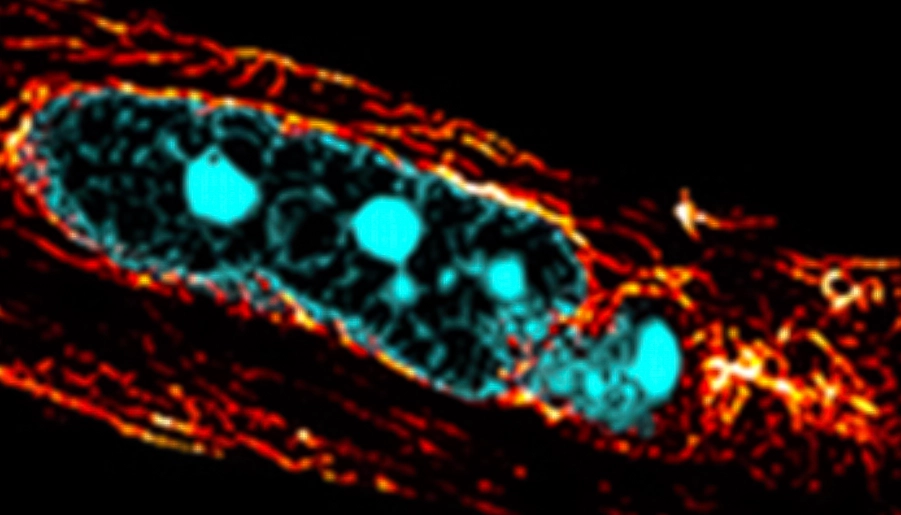
To unravel these complex processes and advance fundamental understanding of muscle physiology, the lab develops cutting-edge methods to manipulate cytoskeletal forces and their coupling to the nucleus in living, contracting muscle cells. Researchers employ advanced live-imaging techniques to quantify real-time changes in nuclear organization, chromatin remodeling, and nucleo-cytoplasmic transport.
Ultimately, the lab aims to understand how these processes become disrupted in disease, and to translate these insights into early diagnostic approaches and novel therapeutic targets for heart disease.
Scholar Profile
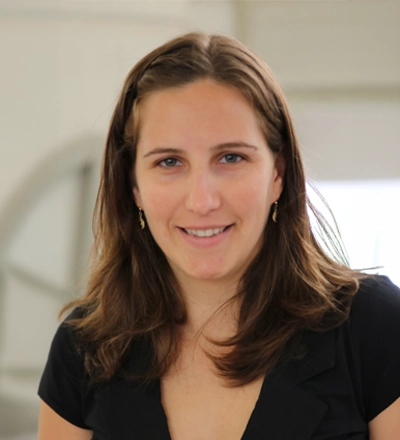
Daria Amiad‑Pavlov competed on the Israeli track and field team in her teens and later attended the University of Washington, Seattle on a full athletic scholarship, competing for the university’s team while doing her BSc in Bioengineering. Her athletic background, together with undergraduate research on skeletal muscle fibers, sparked a lasting fascination with how muscles adapt to different training regimes.
Dr. Amiad‑Pavlov then pursued a direct‑entry PhD in Biomedical Engineering at Technion–Israel Institute of Technology, where she studied rapid force responses of live rat cardiac fibers to changes in length. This work enabled her to demonstrate in real time how sarcomeres—the fundamental units responsible for muscle contraction—adapt to changing mechanical loads.
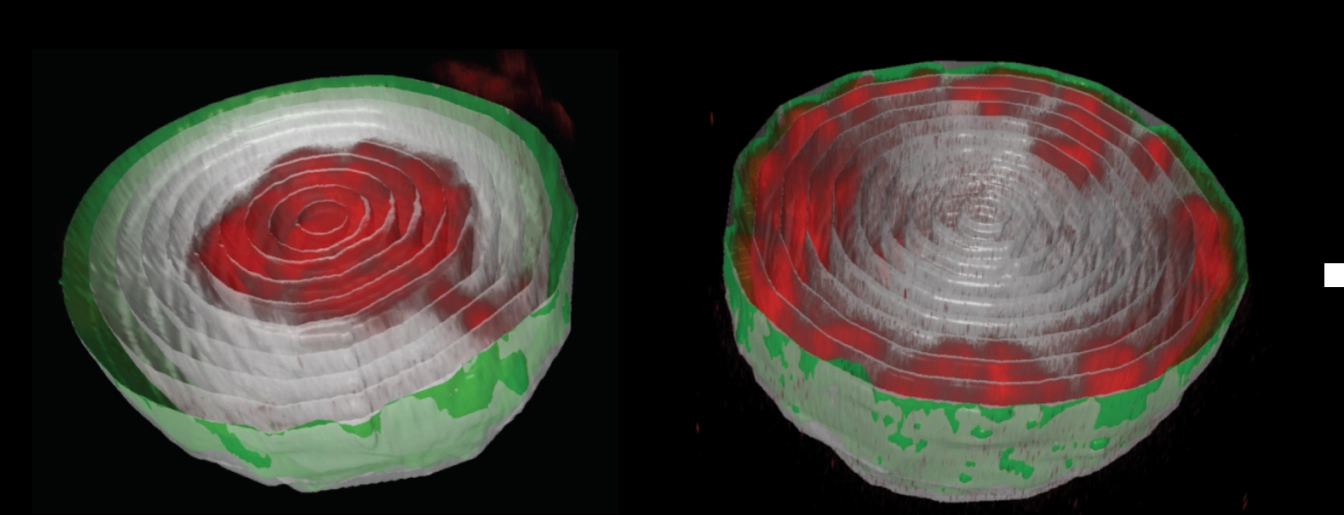
To broaden her understanding of muscle adaptation to mechanical stress, Dr. Amiad‑Pavlov began postdoctoral studies in the emerging field of nuclear mechanotransduction, which examines how mechanical forces applied to the cell nucleus are translated into chemical and biological responses. At the Weizmann Institute of Science’s Department of Molecular Genetics, she applied a method for live imaging of Drosophila (fruit fly) larvae to observe the organization of muscle nuclei in high resolution, replacing earlier approaches that relied on fixed samples. Using this technique, she discovered a previously unknown layer of three‑dimensional chromatin organization that influences cardiac muscle fiber function.
During her second postdoctoral appointment at the University of Pennsylvania’s Perelman School of Medicine in the Department of Physiology, Dr. Amiad‑Pavlov developed a novel method of measuring dynamic strain transfer into the nucleus during the contraction and relaxation of primary, beating heart muscle cells. This work advanced understanding of mechanisms underlying nuclear damage in laminopathies and pointed to a promising new therapeutic avenue for patients who do not respond to existing treatments.
Now leading her own laboratory in the Department of Physiology at the Ruth and Bruce Rappaport Faculty of Medicine, Technion, Dr. Amiad Pavlov investigates the central role of the nucleus in sensing and integrating mechanical signals to regulate gene expression during cardiac and skeletal muscle adaptation to growth, aging, and disease. Her long‑term goal is to develop personalized diagnostic tools for tracking heart disease progression, as well as new therapeutic targets for hypertension and heart failure.
