


About the Lab
The CoLab is dedicated to shaping a future of humane technology. Researchers in the lab study emerging AI and large language model (LLM) technologies with the potential to generate a positive impact on the world. Their work explores self‑evolving systems, human‑AI interaction and evaluation, and develops specialized pre-training strategies to drive innovation while minimizing blind spots.
The lab is deeply committed to collaborative models of development. If LLM technologies are developed solely within industry, control over these systems—and the power they confer—rests with a small number of actors who may prioritize their own interests. In contrast, collaborative LLM development, much like open-source software, evolves continuously through contributions from researchers, developers, and users.
CoLab advances open and collaborative training approaches alongside rigorous evaluation and interpretability methods. The lab’s motto: We do it openly, together.
Scholar Profile
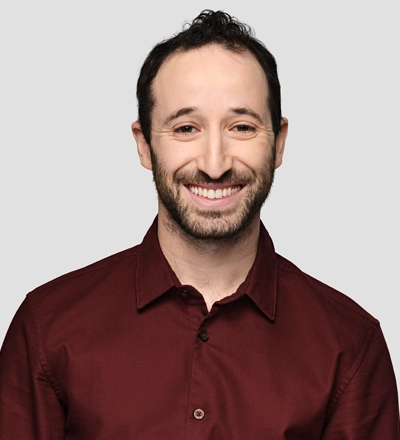
Leshem Choshen earned his PhD in Computer Science at the Hebrew University, specializing in Natural Language Processing (NLP). His doctoral work examined syntax and semantics in NLP, leading to improved methods for machine translation and reinforcement learning for NLP. Dr. Choshen’s experience as a translator from English and Arabic to Hebrew at the Israeli Broadcasting Service enriched this research.
Alongside his PhD, Dr. Choshen worked at IBM Research, where he led the development of Project Debater, an autonomous system that engaged in a live debate with a human and was featured on the cover of Nature. His collaboration with IBM continues today, and all his projects are developed as open‑source initiatives.
Later, Dr. Choshen led a research group at IBM that invented model-merging. The method takes two models trained for different tasks, and without further training merges them into a single model that can do both.
Dr. Choshen’s postdoctoral research at MIT, hosted at the MIT‑IBM Watson AI Lab, focused on three interconnected areas: open and collaborative approaches to Large Language Models (LLMs); methods for evaluating and understanding LLMs in support of community‑driven development; and techniques enabling low‑budget pre‑training research.
At his own laboratory in the Department of Computer Science & Applied Mathematics at Weizmann Institute of Science, Dr. Choshen addresses the exceptionally high computational and engineering costs associated with LLM research—costs that place much of this work beyond the reach of most academic laboratories. His long‑term vision is for LLM development to become as open, collaborative, and accessible as platforms such as Wikipedia or Stack Overflow.
Dr. Choshen is a co‑initiator and designer of the BabyLM Challenge, a competition focused on training language models using small amounts of data comparable to the amount of language a human is exposed to until adulthood.
Throughout his career, Dr. Choshen has received numerous distinctions, including the Israeli Association for AI Best Dissertation Award, the Blavatnik Award for PhD Students, and both the Fulbright and Rothschild Postdoctoral Fellowships. His work has been featured in popular media outlets such as the New York Timesand Wired, and he is listed as a contributor on at least eight patents.
