

A Year of Scientific Breakthroughs
Highlighting Breakthrough Science, Year after Year

In 2025, we celebrate six groundbreaking discoveries that came from the labs of our Zuckerman Faculty, Postdoc and Israeli Postdoc Scholars in Israel and the US. These scientific breakthroughs will greatly impact on the way we live.
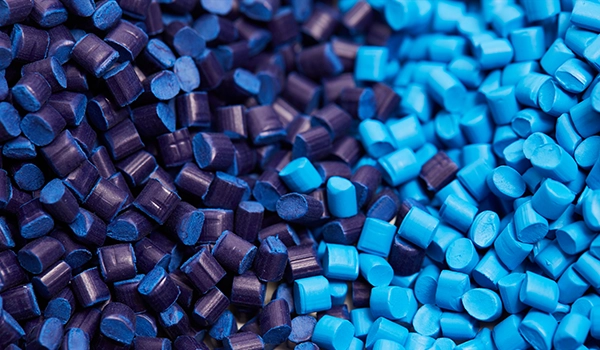
New discovery will enable safer, more energy-efficient methods to produce plastics
WHO: Yossi Weizmann, Zuckerman Faculty Scholar, Ben-Gurion University of the Negev
WHY IT MATTERS:
Prof. Weizmann and his team discovered a new method of controlling when and where plastics and other polymer materials harden, a question that has dodged scientists for several decades. The study was published in the December 2025 issue of Nature Chemistry.
Abstract:
Our understanding of polymers has given rise to fundamental changes in society. Nonetheless, there is much room to further develop and improve creative techniques to enable advanced materials. At the frontiers of this endeavour is the development of switchable catalysts aimed at providing spatiotemporal control over polymerization reactions. The new polymer has the potential to make industrial healing, 3D printing, and repair processes simpler, safer, and more energy-efficient, using materials whose properties can be tuned to suit the required application
READ ABOUT IT: Nature; Jerusalem Post; The Media Line; The brighter side of News
Viruses hidden within fungi could be secret drivers of deadly lung infections
WHO: Neta Shlezinger, Zuckerman Faculty Scholar, Koret School of Veterinary Medicine, The Hebrew University of Jerusalem
WHY IT MATTERS:
Research led by Dr. Shlezinger discovered a surprising factor driving one of the most dangerous fungal infections affecting humans: a virus living inside the fungus itself. Their findings demonstrate that this virus, which lives within the Aspergillus fumigatus fungus, confers significant survival benefits, enhancing the organism’s durability, robustness, and threat level to human well-being. These insights pave the way for novel approaches to combating fungal infections. If scientists can successfully target the internal virus, they might sufficiently weaken the pathogen to allow the body’s immune defenses, or current antifungal medications, to mount a more successful counterattack. At a time when fungal diseases are increasingly resistant to treatment and growing more difficult to manage, offers a promising new direction.
A study conducted by Dr. Shlezinger and her team found an unexpected culprit fueling the severity of one of the most dangerous fungal infections in humans: a virus living inside the fungus itself. research reveals that a virus residing within the Aspergillus fumigatus fungus gives it a powerful survival advantage, making it tougher, more resilient, and ultimately, more dangerous to human health. This discovery opens the door to rethinking how fungal infections are treated. By targeting the virus within the fungus, researchers may one day weaken the pathogen enough for the immune system—or existing antifungal drugs—to fight back more effectively.
In a world where fungal pathogens are becoming more drug-resistant and harder to treat, the study provides a rare glimmer of hope: perhaps we’ve been overlooking a key player all along.
READ ABOUT IT: Nature; News medical Life Science
Major breakthrough in quantum materials
WHO: Hadas Soifer, Zuckerman Faculty Scholar, Tel Aviv University
WHY IT MATTERS:
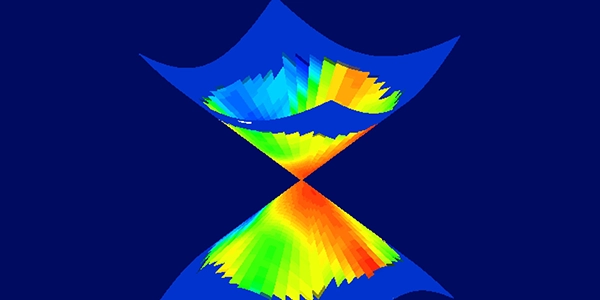
Dr. Soifer and her research team have developed phase-resolved electron interferometry, a major breakthrough which significantly advances the field of quantum materials beyond the state-of-the-art.
Abstract:
While interferometric phase retrieval has revolutionized other areas of science—from atomic, molecular, and optical (AMO) physics to photonics and astronomy—the phase of the electronic wavefunction in solids has long remained inaccessible. Traditional probes such as STM and conventional ARPES provide unparalleled access to amplitude and spatial information but not to phase. Conversely, XUV and HHG-based phase-sensitive techniques lack the necessary energy and momentum resolution to resolve subtle electronic features like Dirac cones or superconducting gaps.
The methods employed by Dr. Soifer and her team brings phase reconstruction to the realm of quantum materials, and establishes a new experimental paradigm that unites ultrafast optics, coherent control, and condensed matter physics, opening new directions for research.
READ ABOUT IT: Arxiv.org
Visualizing cholesterol crystallization at the nanoscale
WHO: Angelica Elkan, Zuckerman Faculty Scholar, Tel Aviv University
WHY IT MATTERS
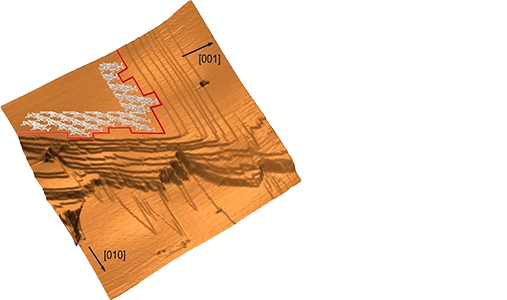
Cholesterol crystallization lies at the heart of two major human diseases: atherosclerosis and gallstone formation. However, the molecular events that trigger the transition from liquid-crystal cholesterol to solid pathological crystals remain poorly understood.
In our research, we use advanced in-situ Atomic Force Microscopy (AFM) to directly visualize the nucleation and growth of cholesterol crystals at nanoscale resolution and in real time. This unprecedented view reveals the early steps, growth modes, and phase transitions that govern cholesterol solidification.
Understanding these mechanisms opens the door to rational strategies for preventing pathological crystallization, designing targeted inhibitors, and translating insights from model systems into living tissues.
READ ABOUT IT: cell.com
Development of a rapid corrosion screening framework for pem electrolyzers

WHO: Ariel Friedman, Zuckerman Israeli Postdoctoral Scholar, University of Connecticut
WHY IT MATTERS:
We introduced a novel operando diagnostic tool that uses low-frequency impedance to distinguish between stable coatings and active corrosion in PEM water electrolyzers. Unlike traditional ex-situ methods, this approach tracks interfacial evolution in real-time, detecting failure mechanisms hours before they manifest in conventional metrics. This framework removes a critical bottleneck in materials discovery, accelerating the deployment of cost-effective components for the hydrogen economy.
READ ABOUT IT: Acs Publications
Key role of neural oscillations in motor coordination of speech uncovered
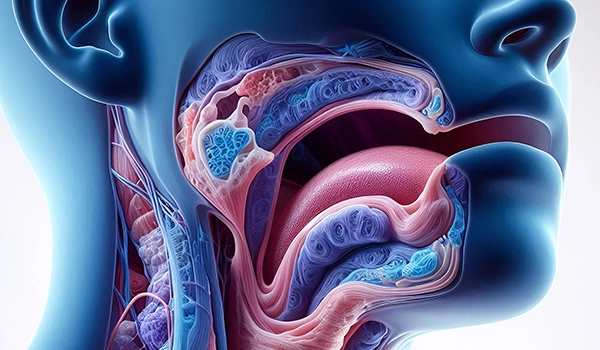
WHO: Itzik Norman, Zuckerman Israeli Postdoctoral Scholar, UC San Francisco
WHY IT MATTERS:
Speaking fluently requires the brain to generate motor commands with extraordinary speed and precision, coordinating the activity of nearly 100 muscles across the vocal tract at millisecond timescales. How the human brain achieves such precise temporal coordination has long remained a key open question. Using direct intra-cranial recordings from human speech-motor cortex, Dr. Norman and colleagues discovered an intrinsic neuralrhythm (“theta” oscillation) that supports the coordination of speech movements. To understand how this neural rhythm shapes speech behavior, the team employed AI-assisted kinematic tracking of vocal-tract movements, including the tongue, lips, and jaw. These measurements revealed brief, discrete “pulses” of coordinated constriction gestures associated with phoneme production. Remarkably, during fluent speech these articulatory pulses occurred approximately 7–8 times per second and were tightly coupled to the phase of the cortical rhythm. In other words, Dr. Norman found that fluent speech rides on top of an intrinsic brain rhythm—a neural mechanism that helps coordinate motor commands for successive vocal-tract movements. This study further linked momentary disruptions in this phase coupling to articulatory errors, and demonstrated that individuals who generally spoke at faster rates exhibited a stronger and more periodic neural oscillation.
Together, these findings point to a fundamental timing mechanism that the brain uses to organize speech motor commands, and suggest a broader principle by which rhythmic neural activity coordinates complex, sequential motor behaviors. The results have important implications for understanding speech impairments across diverse populations, including individuals with aphasia, children with speech delays, and people who stutter. They also provide a mechanistic framework for the development of real-time brain–computer interfaces for speech neuroprostheses.
This research was conducted in the laboratory of Dr. Edward F. Chang at the University of California, San Francisco (co-authors: Loren M. Frank and Edward F. Chang).
READ ABOUT IT: BiorXiv