
Focus: Quantum
Observe Carefully: It Changes Everything
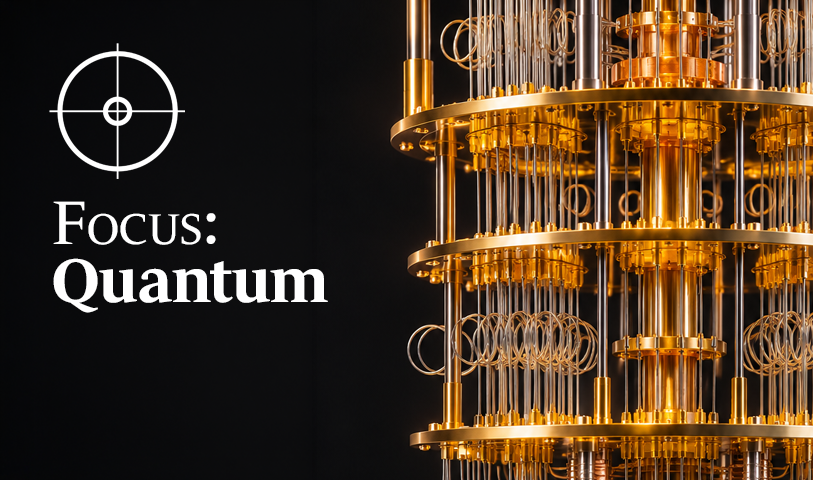
Quantum mechanics has long described a world we cannot see. Today, Zuckerman scholars are turning it into something we can measure, build and use. They sense fields at the nanoscale, shape electron waves with light, design materials with quantum properties, build chip-scale devices for information technology and search for new states of matter.
Their work follows a clear path. It begins with seeing: sensors and electron beams that reveal what was once hidden. It moves to engineering: ultrafast light that creates and probes quantum materials. It reaches computing and communication, where atoms and photons become the building blocks of future technology. And it ends with discovery, as electrons acting together produce behavior no single particle could show. From observing the quantum world to harnessing it, these are the scientists leading the way. Together, these nine scientists trace the arc of the quantum era.
Seeing: How do we detect the quantum world?

WHO: Assaf Hamo, Zuckerman Faculty Scholar, Bar-Ilan University
RESEARCH PROMISE:
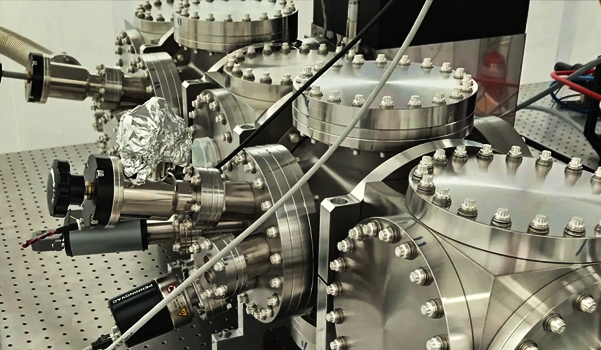
Imaging the nanoscale with sensors that are themselves quantum. Hamo’s lab combines two ultra-sensitive sensors: carbon nanotubes, which detect electric potentials, and nitrogen-vacancy (NV) centers in diamond, which detect magnetic fields. Together, these hybrid sensors are designed to read minute fields at the nanoscale and probe the quantum nature of materials with extraordinary sensitivity.
Read on arXiv: Highly resilient, error-protected quantum gates in a solid-state quantum network node
WHO: Osip Schwartz, Zuckerman Faculty Scholar, Weizmann Institute of Science
RESEARCH PROMISE:
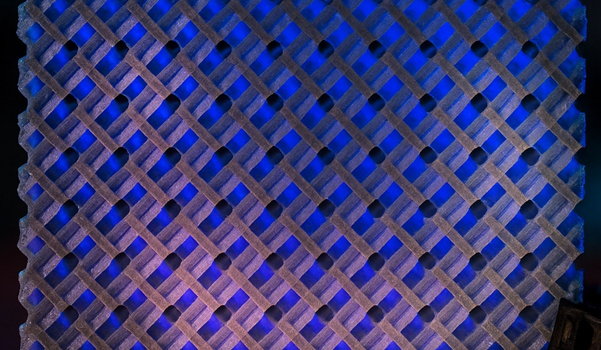
Controlling free electrons with laser light. Schwartz’s lab uses laser beams to shape electron waves in space and time, creating quantum states of electrons that have never been explored. These engineered electron waves open new directions in electron microscopy and spectroscopy, new radiation sources and new ways to control quantum systems at the nanoscale. One goal is laser-enhanced electron microscopy that delivers sharper contrast and can image thicker samples.
Read on Optica Quantum 2.0 Conference: Spin Squeezing in Electron Microscopy
Engineering: How do we create and study quantum materials?
WHO: Hadas Soifer, Zuckerman Faculty Scholar, Tel Aviv University
RESEARCH PROMISE:
Using ultrafast light to watch electrons inside quantum materials. Soifer’s lab applies time- and angle-resolved photoemission spectroscopy to topological insulators and Weyl semimetals. A key focus is photocurrent generation, in which absorbed light drives an electric current. The aim is to understand how light interacts with topological materials, paving the way to optical control of currents in quantum devices.
Read on Communications Materials: Equilibrium trions on the surface of Ta2NiS5
WHO: Alon Ron, Zuckerman Faculty Scholar, Tel Aviv University
RESEARCH PROMISE:
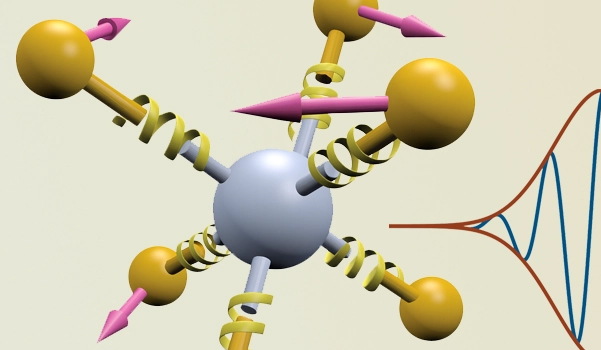
Steering collective quantum behavior in solids with ultrashort laser pulses. Ron studies quantum magnets, superconductivity and topological materials on femtosecond timescales, combining custom-designed crystal growth with nonlinear optical spectroscopy. His goal is to create and stabilize new electronic phases of matter that exist only out of equilibrium, and to reveal their underlying symmetries.
Read on Nature Communications: Coherent control through phonon anharmonicity
Computing and Communicating: How can quantum mechanics transform information technology?

WHO: Roy Zektzer, Zuckerman Faculty Scholar, Bar-Ilan University
RESEARCH PROMISE:
Bringing atoms and photons together on a single chip. Most quantum devices require ultra-low temperatures and bulky laboratory setups. Zektzer builds hybrid atom-photon devices based on hot vapor technology that work at room temperature on a chip. His aim is compact quantum technologies for sensing, timekeeping, communication and quantum memory.
Read on Optica Quantum: Enabling atom-clad waveguide operation in a microfabricated alkali vapor-photonic integrated circuit
WHO: Yaron Bromberg, Zuckerman Faculty Scholar, The Hebrew University of Jerusalem
RESEARCH PROMISE:
Guiding quantum light through disorder. Bromberg studies how entangled photons travel through complex media, such as scattering materials and multimode optical fibers. His group works with high-dimensional quantum states (qudits), which carry more information and resist noise better than qubits, and develops ways to correct for scattering. The goal is more robust and secure quantum communication.
Read on Optica Quantum: High-dimensional quantum key distribution using a multi-plane light converter

WHO: Or Sharir, Zuckerman Faculty Scholar, Technion – Israel Institute of Technology
RESEARCH PROMISE:
Using AI to simulate the quantum world efficiently. Sharir asks how much model, data and computing power are truly needed for reliable AI, and develops principles that let smaller models learn more from less. He applies these ideas to AI-accelerated simulations of quantum many-body systems, linking advances in artificial intelligence with the computation of quantum matter.
Read on Nature Communications: Image super-resolution inspired electron density prediction
Discovering: What new states of matter emerge from quantum behavior?

WHO: Evyatar Tulipman, Zuckerman Israeli Postdoctoral Scholar, Stanford University
RESEARCH PROMISE:
Searching for the origins of strange metals and high-temperature superconductivity. Tulipman uses theory and numerical methods to study strongly correlated electrons and unconventional superconductivity. He explores how strange metals, which conduct electricity in ways conventional theory cannot explain, are connected to superconductivity, including the idea that strange-metal behavior arises from remnants of the superconducting state.
Profile: Kivelson Group, Geballe Laboratory for Advanced Materials
Read on Physical Review B: Extended strange metal regime from superconducting puddles
WHO: Yachin Ivry, Zuckerman Faculty Scholar, Technion – Israel Institute of Technology
RESEARCH PROMISE:
Watching collective quantum behavior emerge at the nanoscale. Ivry’s group studies superconductivity, in which electrons pair up and share one quantum state across large distances. The group develops methods to probe this behavior down to the atomic scale, asking how small a system can be and still behave collectively. The goal is to turn these insights into nano and quantum technologies, including low-power computing.