

Focus: AI
Eye on AI: Frontier Research from Israel’s Leading Labs

Across Zuckerman-affiliated institutions, a new generation of faculty scholars is doing something harder than building the next big model — they’re asking whether the foundations of modern AI are actually correct. From computational complexity to adversarial threat modeling, these labs are producing the kind of rigorous, first-principles work that the field urgently needs.
These labs represent a broader thesis: that the next decisive advances in AI won’t come solely from scaling, but from deeper scientific understanding of how learning systems work, fail, and can be made both efficient and trustworthy.
Can Intelligence Scale Down?

WHO: Or Sharir, Zuckerman Faculty Scholar, Technion – Israel Institute of Technology
RESEARCH PROMISE:
The dominant paradigm in AI has been simple: scale up. More parameters, more data, more compute. Or Sharir’s Efficient Intelligence Lab is stress-testing that assumption.
The lab works on what Sharir calls the sufficiency frontier — the minimum resources needed to achieve strong reasoning — and treats efficiency not as an engineering afterthought but as a scientific problem with deep theoretical structure. The core questions are precise and largely unsolved: How do model size, dataset scale, and compute interact as variables? What architectural choices make that tradeoff curve favorable? Can smaller models be designed to learn more from less, rather than just trained on more?
By building formal frameworks for comparing neural architectures, the group is working to make efficiency gains reproducible and predictable — a sharp contrast to the empirical lottery that characterizes much of current architecture search. For researchers frustrated by the gap between theoretical ML and deployable systems, this lab is working exactly at that interface.
Offensive AI: Studying the Threat to Counter It

WHO: Yisroel Mirsky, Zuckerman Faculty Scholar, Ben Gurion University of the Negev
RESEARCH PROMISE:
Most AI safety discourse focuses on alignment. Yisroel Mirsky’s Offensive AI Lab focuses on something more immediate: adversaries who are already deploying AI against us right now.
The lab operates at the intersection of adversarial machine learning and cybersecurity, studying how AI amplifies offensive capabilities — from deepfakes and swarm malware to ML-assisted zero-day vulnerability discovery. Rather than waiting for attacks to reach the mainstream, Mirsky’s team reverse-engineers’ offensive techniques proactively, building the countermeasures before the threat matures.
This is threat intelligence done scientifically: rigorous, empirically grounded, and offensively informed. If you want to understand how machine learning is actively reshaping the attack surface — and what defenders need to build — this lab is doing the foundational work.
A Mathematical Theory of What Neural Networks Actually Learn
WHO: Gal Vardi, Zuckerman Faculty Scholar, Weizmann Institute of Science
RESEARCH PROMISE:
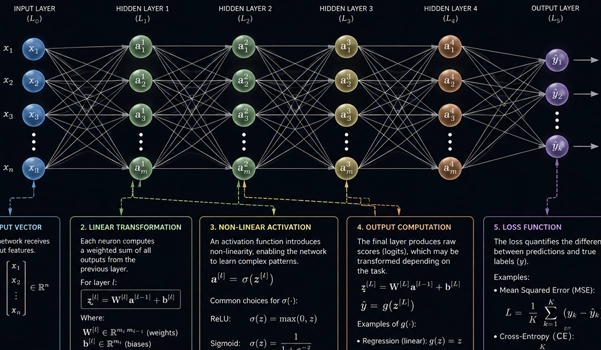
Deep learning works. What’s far less clear is why — and that gap between empirical success and theoretical understanding is exactly where Gal Vardi’s group operates.
The lab develops rigorous mathematical tools to explain the learning dynamics of neural networks: which features a model will preferentially extract from data, how generalization and performance scale with model and dataset size, and what signatures predict brittleness or failure before deployment. Rather than accepting deep learning as an inscrutable black box, Vardi’s team is building a predictive theory — one where model behavior follows from clear, testable principles.
For researchers designing the next generation of learning systems, this kind of theoretical grounding isn’t academic luxury. It’s what separates principled engineering from trial and error.
The Complexity Frontier: Where AI Hits a Wall — and Why
WHO: Ohad Trabelsi, Zuckerman Faculty Scholar, University of Haifa
RESEARCH PROMISE:
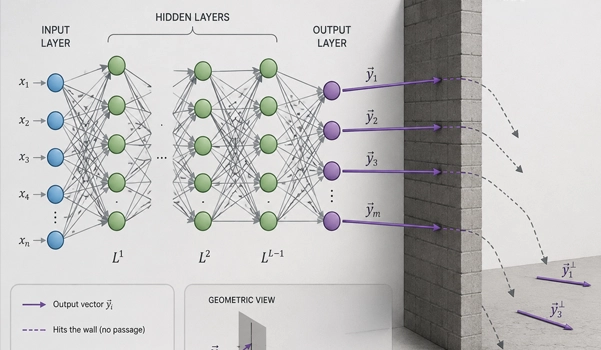
Some problems yield to better algorithms. Others are hard in a deeper sense — and no amount of compute will change that. Ohad Trabelsi’s lab studies exactly where that line falls, and why it matters for AI.
Working at the intersection of computational complexity and modern AI, the group designs more efficient algorithms while simultaneously probing the theoretical limits of what any algorithm can do. By mapping the hidden structure that connects different computational problems, the lab produces results with two kinds of value: practical speedups for AI tasks that are currently bottlenecked, and principled explanations for why certain problems remain resistant to brute-force scaling.
For engineers and researchers who want to know whether a problem is solvable faster or fundamentally hard, this work provides the most rigorous answers available.