

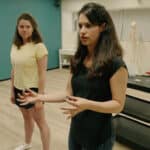
בין יוון העתיקה לאנטרקטיקה: חמישה חוקרים ישראלים שרוצים לשפר את העולם

Genetic study details complex ancestry of East Africa’s Swahili people

הפיתוח של הטכניון שיביא את המדליה האולימפית הבאה: “אומת הסטארט אפ נכנסת לספורט”

Warming up in Mars? BGU finds polymers that heat up when exposed to LED
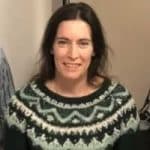
In a study published in the NPJ Parkinson’s Disease journal, scientists from Israel’s University of Haifa reported a discovery that could lead to treatment, and apotential stop the spread of Parkinson’s disease. The international research team, led by Prof. Shani Stern of the university’s Sagol Department of Neurobiology, used an innovative cell reprogramming technique to identify malfunctioning neural processes common to both types of the progressive brain disease.

Fifteen Michigan women came to Israel in June as part of the Women of the American Technion Society (WATS) Mission, which included a visit to Arielle Fischer’s Biomechanics and Wearable Tech Lab.

Zuckerman STEM Leadership Program is catapulting academic ties, scientific discovery in the US and Israel
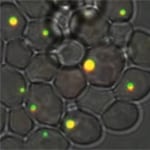
Synthetic cells reveal the secrets of protein affinity in living cells
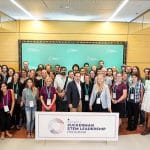
The Zuckerman STEM Leadership Program provides over $100 million in scholarships and educational activities to participating scholars and Israeli universities, with funding for 20 years

Survey also found that mental resilience can significantly reduce the impact of stress on mental health during the pandemic

Cancer immunotherapy — empowering a patient’s own immune system to clear away tumors on its own — holds great promise for some patients. But for other patients, immunotherapy just doesn’t work.
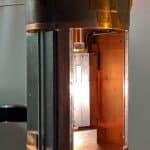
What makes for a good dark matter detector? It has a lot in common with a good teleconference setup: You need a sensitive microphone and a quiet room.
Is the wanton killing of cells in autoimmune disease a case of mistaken identity, or does it arise from an important physiological service?

by David Greenberg, Zuckerman Postdoctoral Scholar at Bar-Ilan University and Honorary Research Associate at the Autism Research Centre, University of Cambridge