

Dr. Assaf Ramot
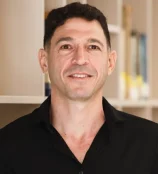
Although stress is widely known to influence learning, Assaf Ramot has long been interested in how stress reshapes neural circuits—the patterns of activity and interaction between networks of neurons. His PhD research in neurobiology at the Weizmann Institute of Science identified the cellular mechanisms by which chronic stress alters the circuits that regulate the hypothalamic-pituitary-adrenal axis, the brain’s central stress-response system.
For his postdoctoral training, two years of which were funded by a Zuckerman Postdoctoral Fellowship, Dr. Ramot sought to develop the tools to study behavior, learning, and adaptive plasticity at the level of neural populations and circuit dynamics. He therefore moved to the Department of Neuroscience at the University of California, San Diego. He was part of a lab known for pioneering in vivo imaging of neural circuits in awake, behaving animals. There, he studied the neural circuit mechanisms that allow practice to transform variable movements into skilled actions. He showed that during learned movements, the motor thalamus provides the strongest input to the primary motor cortex.
Dr. Ramot’s lab in the School of Psychological Sciences at Tel Aviv University now brings together two fields—stress neurobiology (from his PhD) and systems neuroscience (from his postdoc)—to ask how stress reshapes brain circuitry and how these changes influence learning and adaptive behavior.
His team combines longitudinal two-photon calcium imaging in mice with holographic single-neuron stimulation, pathway-specific perturbations, and computational analysis of neural population dynamics. The focus is on motor learning as a model of adaptive plasticity—animals begin with variable, exploratory behavior and, through practice, develop stable and reproducible actions. Dr. Ramot hypothesizes that chronic stress disrupts this transition from exploratory to efficient neural dynamics, thereby impairing learning. Dr. Ramot aims not only to answer fundamental questions in neuroscience, but also to introduce new approaches to studying them in Israel, where prolonged stress has become part of daily life for many.