
Focus: Evolution
Elucidating the Secrets of Evolution
Zuckerman scholars play an important part in Israel’s molecular biology ecosystem. With pioneering research amplified by artificial intelligence and computation, they are shedding light on the mysteries of life and opening new horizons for care.
Bringing the Computational Revolution to Maternal and Pediatric Medicine

WHO: Danny Ben-Zvi, Zuckerman Faculty Scholar, The Hebrew University of Jerusalem
At the Hebrew University’s computational medicine center, advances in machine learning, AI, and molecular biology are converging to bring modern research closer to the clinic, yielding insights that will directly impact patient care.
RESEARCH PROMISE:
Computational and data science — machine learning, AI, and molecular biology — have transformed the research lab over the past five years. But that revolution has not yet reached the hospital ward at scale. Pregnant women and neonates remain systematically under-represented in medical research, leaving a major knowledge gap in care during pregnancy and early development. HUCMED’s answer is an integrative paradigm that pairs groundbreaking non-invasive molecular assays with the wealth of electronic medical records already held on mothers and children — reshaping preventive care with a lifelong impact.
Building What Comes Next
Through its Mother and Child Flagship project, the Center is building a community connecting clinicians, scientists, and computational experts; creating shared infrastructure for clinical data, sample collection, and molecular technology; and funding researcher-led studies — from earlier detection of postpartum depression to new pediatric cancer markers and personalized fertility care.
A New Way of Understanding Pregnancy as a Whole-body Biological Transformation Rather Than an Event Limited to the Reproductive System

WHO: Glen Pridham, Zuckerman Postdoctoral Scholar, Weizmann Institute of Science
RESEARCH PROMISE:
Researchers, led by Professor Uri Alon’s Lab and Zuckerman postdoctoral researcher Dr. Glen Pridham at the Weizmann Institute of Science, offers a new way of understanding pregnancy as a whole-body biological transformation rather than an event limited to the reproductive system.
Pregnancy is commonly treated as a temporary change that the body quickly recovers from after birth. By analyzing millions of routine blood tests from hundreds of thousands of pregnancies, the researchers found that different organs respond very differently. Some biological systems appear to become “younger” during pregnancy and recover quickly after delivery, while others show changes that resemble accelerated aging and may take months, or even up to a year, to return to their pre-pregnancy state.
The research also discovered that recovery after childbirth is far from uniform. Some blood markers return to normal within weeks, while others continue changing long after delivery, suggesting that the postpartum period is a much longer and more complex biological process than previously thought. These findings provide the first detailed timeline of how the body recovers across multiple organ systems following pregnancy. Read on Nature Communications
Menopause: A sudden “physiological cliff”
In a second current study by the group, focusing on menopause, show that menopause is not simply a gradual consequence of getting older. Instead, it appears to be a distinct biological transition that triggers rapid, coordinated changes throughout the body. By analyzing more than 300 million routine blood test results from over one million women in Israel and the United States, he found that many health markers change abruptly around the time of the final menstrual period. These changes affect hormones, bone health, liver function, cholesterol, kidney function, inflammation, muscles, and blood cells, suggesting that menopause acts as a major “reset point” for female physiology rather than a slow, continuous decline.
The study also found that hormonal changes begin more than 10 years before menopause, long before most women recognize that they are entering the menopausal transition. In addition, women using hormone replacement therapy showed smaller changes in many of the affected biological markers, suggesting that some of menopause’s effects can be moderated. Interestingly, not all changes were negative; Iron levels and anemia tended to improve after menopause, while symptoms related to depression increased only temporarily around the transition. Read on arxiv
Study Reveals Genetic Trade-Off Between Growth and Lifespan

WHO: Itamar Harel, Zuckerman Faculty Scholar, The Hebrew University of Jerusalem
RESEARCH PROMISE:
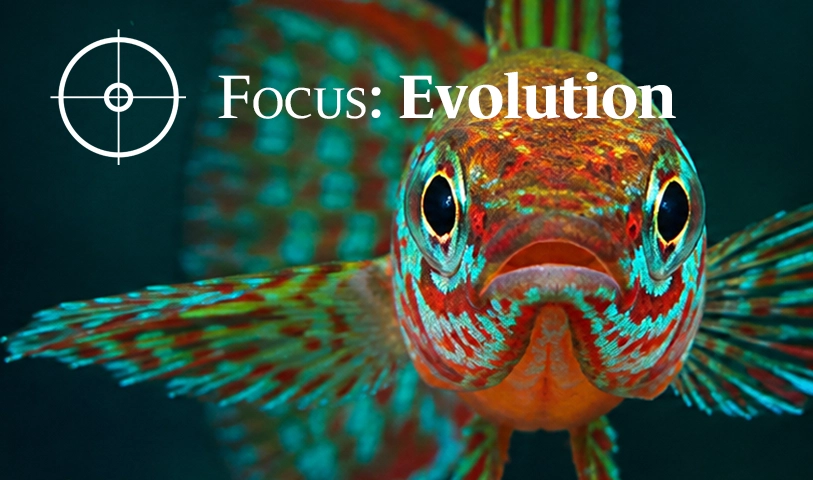
Early fitness linked to later disease in killifish
The study identifies a gene that can speed up growth and sexual maturation early in life, while increasing vulnerability to tumors and shortening lifespan. The study offers rare experimental evidence for a long-standing evolutionary theory of aging.
Using the African turquoise killifish, a fast-aging vertebrate model, Assoc. Prof. Harel and his team used gene editing and long-term observation to show how one gene can create a biological trade-off: advantages in youth can come at a cost later in life. The findings help explain why evolution may favor early-life success even when it contributes to aging and disease, and they open new avenues for understanding how development, cancer, and longevity are biologically connected. Read on ScienceAlert; Read on Eurekalert
An Unbroken Generational Arc Sustains the Continuity of Life, and Is Served in DNA Damage Repair Syndromes
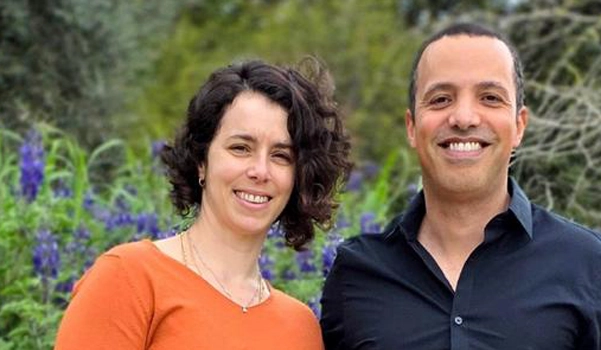
WHO: Itamar Harel, Zuckerman Faculty Scholar, The Hebrew University of Jerusalem
RESEARCH PROMISE:
A new view of aging: How the immune system rewrites rapid aging
What if some of the damage we blame on broken DNA is actually caused by the body’s own alarm system? A new Hebrew University study, led by Marva Bergman, Itamar Harel, and collaborators and published in Genes & Development, suggests just that. The researchers found that in genetic diseases marked by severe DNA damage, such as Ataxia-Telangiectasia and Bloom syndrome, much of the harm may come from cGAS, a cellular “danger sensor” meant to detect viral invaders, but which can mistakenly react to the cell’s own damaged DNA. This false alarm can trigger chronic inflammation, tissue decline, and fertility problems. Strikingly, reducing cGAS activity in a fast-aging vertebrate model eased several of these symptoms, pointing to a new therapeutic idea: treating not only DNA damage itself, but also the inflammatory overreaction it provokes. Read on Eurekalert; Read on Ynet (Hebrew article)