

Dr. Itai Kallos
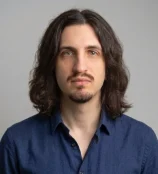
- McCarthy Lab
-
Dr. Michael C. McCarthy Lab website
Itai Kallos is a physicist whose research focuses on probing the molecular inventory of space through spectroscopy to advance our understanding of interstellar chemistry. Although often described as a vacuum, the interstellar medium (ISM)—the region between stars—is a chemically rich and diverse environment hosting many molecules. Despite extensive study of the ISM, fundamental questions remain unresolved, including the identification of the carriers of the diffuse interstellar bands, the origin of the unidentified infrared bands, and the mechanisms governing the formation of carbonaceous species in space.
During his doctoral research in experimental physics at Ben-Gurion University, he developed a highly sensitive (2 + 1′) resonance-enhanced multiphoton ionization (REMPI) scheme for detecting O₂. This work enabled studies of the rovibrational structure of O₂, autoionization processes, and a patented application in laser ignition. It also led to a collaboration with the Surface Dynamics Department at the Max Planck Institute in Göttingen, Germany, where he studied the nonadiabatic dynamics of O₂ interacting with surfaces.
His current research at the Center for Astrophysics | Harvard & Smithsonian integrates astronomical observations, laboratory experiments, and theoretical calculations to study polycyclic aromatic hydrocarbons (PAHs), a class of molecules composed of fused aromatic carbon rings. PAHs are estimated to account for up to 25% of interstellar carbon and are at the nexus of many open problems in astrochemistry. By identifying aromatic molecules in molecular clouds, elucidating their formation and growth mechanisms, and determining how aromatic chemistry influences the physical and chemical evolution of the ISM, his work aims to address longstanding questions in the field.
He seeks to contribute to the long-standing tradition of scientific collaboration between Israel and the United States and to leverage his expertise in laser spectroscopy alongside advanced microwave spectroscopic methods to pursue his future research goals.