


Researchers say artificial light further harms coral reefs already endangered by a variety of environmental threats.
In a new study on the sense of smell, Weizmann Institute researchers have managed to strip much of the mystery from even complex blends of odorants, not by uncovering their secret ingredients, but by recording and mapping how they are perceived.

Israeli researchers have developed AI-based technology they say could contribute to the development of a more effective screening tool for the early detection of suicidal tendencies and risks.

These findings can revolutionize technology development and can pave the way for a wide range of devices on an atomic scale.

The study confirmed that cell death is due to cells declining in coordination, not functionality.

New high-speed amphibious robot inspired by the movements of cockroaches and lizards, swims and runs on top of water at high speeds and crawls on difficult terrain.

The nanosatellite, developed and built by students and researchers, will hitch a ride on a NASA spacecraft and collect data on cosmic radiation in space

Testing campus wastewater for COVID-19 allows for the detection of otherwise asymptomatic cases, and can narrow down cases to specific zones.
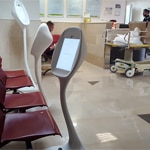
Diagnostic Robotics cures ER waiting times and medical pain points with algorithms, not drugs

A new study conducted by researchers from the US and the Weizmann Institute suggests at least some of the Moon’s water ice may be trapped at more accessible locations
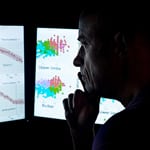
Research team at BGU have developed a new way to test clinical trials at a lower cost, while improving their success rate and efficiency
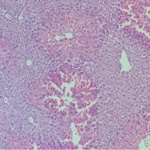
In a study published in Nature Medicine, researchers from the Weizmann Institute have, using mouse models of acute liver failure, discovered three new subsets of liver cells that orchestrate the development of this condition.

“We hope that in the future we will be able to identify those women who are at risk for weight gain through a simple examination – and perhaps even suggest ways to prevent this phenomenon.”
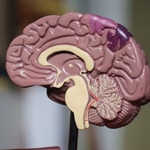
What if an MRI scan could determine whether a weight loss program was likely to be effective? BGU researchers have discovered a neural subnetwork of connected regions between the brain and gastric basal electric frequency that correlates with future weight loss based on connectivity patterns.