

New study indicates that cancer treatments make the immune system more resistant to severe symptoms of the SARS-CoV-2 coronavirus.

New TAU study examined the brain’s reactions in conditions of uncertainty and stressful conflict in an environment of risks and opportunities. The researchers identified the areas of the brain responsible for the delicate balance between desiring gain and avoiding loss along the way.

Prof. Ido Kaminer brings you inside his Electron Beam Quantum Dynamics Lab, where Zuckerman Postdoctoral Scholar Morgan Lynch is currently conducting his research

With the addition of just a small number of autonomous vehicles (AVs) on the road, traffic flow can become faster, greener, and safer in the near future, a new study suggests.

Researchers show that stress-inflammatory response-reducing treatment during colorectal cancer surgery decreased metastatic risk.
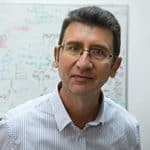
“Soon we should have enough people in the population who were at some stage infected with the coronavirus and these people have antibodies”
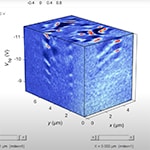
A newly identified kind of disorder may lead to new “twistronics”
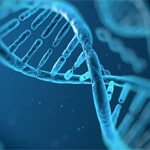
Some acquired traits are actually transmitted to next generations.

Researchers at Ben-Gurion University of the Negev have developed a new artificial intelligence technique that will protect medical devices from malicious operating instructions in a cyberattack as well as other human and system errors.
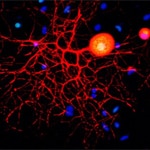
A study led by researchers at the Weizmann Institute of Science suggests an original approach to treating chronic pain by targeting a key gateway – one that leads to the activation of genes in the peripheral nerve cells that are involved in many of its manifestations.

In the new study, two Weizmann research groups applied a “hyper-water” method for vastly increasing the sensitivity of certain biomolecular NMR experiments.
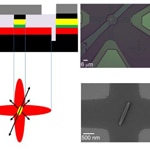
A novel magnetic tunnel junction, which has four resistance states instead of two states in existing magnetic tunnel junctions, may pave the way to novel spintronics devices, including multi-level magnetic memory.
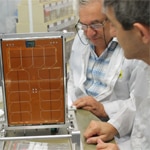
The collaboration yields innovative electronic receiver and computer for nano-satellites that will be launched in December

Two leading Israeli researchers report from the turbulent Israeli front line of the global ‘organ-on-a-chip’ sector