

How are the body’s day-night cycles orchestrated between different organs, tissues and cells?

Israel’s significant climate diversity allowed researchers to study individual animals of the same species that live in very different climatic conditions.

New study finds aspartame, sucralose and saccharin interfere with bacterial communication in the gut.

Bar-Ilan University researchers demonstrate disorder-induced localization to obtain random laser

A study of the genetic basis of blood vessel growth finds a surprise player helping cells ace this complex feat

A new Tel Aviv University (TAU) study found empathy in mammals is rooted in their sense of identity and belonging to a group.

New methodologies developed by Ben-Gurion University of the Negev researchers will enable search engines to overcome the complexities of name identification resulting in significantly more accurate online people searches.

Seahorses, despite being relatively poor swimmers, can move their heads at the speed of 0.002 seconds to capture prey.
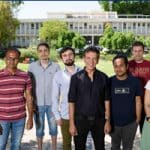
A research pivot by Weizmann Institute scientists uses artificial intelligence to unravel the mysteries of colliding particles

A new technology from Tel Aviv University will make it possible to insert ‘good’ bacteria into the body or into diverse environmental niches for the purpose of injecting toxins and eliminating ‘bad’ bacteria.

The secrets of “professional secretor” cells: how they stay in shape

Technion researchers found an efficient, inexpensive method to produce renewable hydrogen fuel from water.
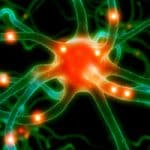
The objective of the Hebrew University of Jerusalem research is to create a deep-learning artificial infrastructure that will act like a human brain.
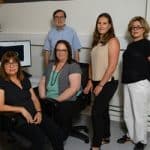
A novel imaging method reveals a surprising arrangement of DNA in the cell’s nucleus