


Engineers from Tel Aviv University have come up with a way to transfer colour-correcting films onto the surface of contact lenses.
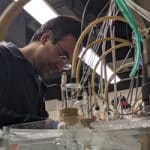
Researchers at USC Dornsife and Weizmann Institute of Science have found that protein “wires” connecting a bacterial cell to a solid surface tend to transmit electrons with a particular spin.

A new joint study by Tel Aviv University (TAU) and Weizmann Institute of Science researchers has yielded an innovative method for bolstering memory processes in the brain during sleep.
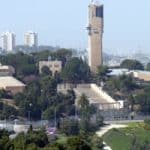
Israel’s leading university is the Hebrew University of Jerusalem, the research showed, with four programs ranked among the top 100 in their field.

A possible revolutionary breakthrough recently occurred when an experiment at BGU observed a very fundamental and unique effect of quantum mechanics in single isolated atoms, called the geometric phase.
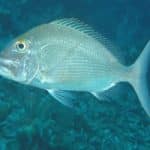
As explained in an article recently published by ‘Nature Microbiology,’ researchers from Ben Gurion University and the Hebrew University managed to identify the functionality of fish’s core microbiomes.
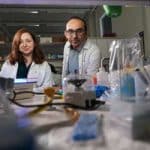
Researchers at the Technion have created a biological computer, constructed within a bacterial cell and capable of monitoring different substances in the environment.
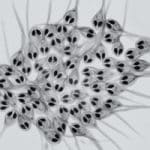
A non-oxygen breathing creature, unexpectedly discovered by researchers at Tel Aviv University, challenges widely held assumptions about the animal world.
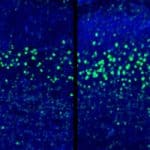
A study in mice suggests how an acute inflammatory immune response in pregnancy may be tied to autism spectrum disorders.
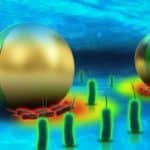
Electroporation is a technique seen in microbiology where an electrical field is applied to cells in order to increase the membrane’s permeability, allowing drugs, DNA or chemicals to be introduced.

Researchers also formulate a novel antibody capable of blocking the development of the skin condition in mice
A unique silicone model developed at Israel’s Technion reveals a previously unknown source of injury to premature infants on assisted ventilation.
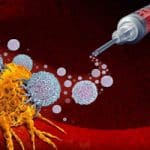
Over expression of certain immuno proteasome subunits in melanoma are tied to anti-cancer immune activity.
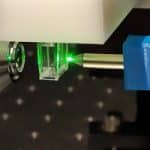
The new technology was developed by researchers at Bar Ilan University.